
Top 4 Companies Shaping the Future of Remote Online Notarization
Remote online notarization is no longer a new concept.
It’s already part of how documents are handled in real estate, financial services, legal operations, and other regulated environments. What used to feel like an alternative is now a standard option in many workflows.
But the way it’s implemented still varies a lot. Some platforms treat it as a standalone service. Others build it into broader systems. Some focus on access and availability. Others focus on structure, compliance, or integration.
That’s why the “future” of remote notarization is not about whether it will be used. It’s about how it will fit into the systems that depend on it.
The Shift Is Happening Under the Surface
At first glance, most platforms look similar. You upload a document, verify identity, connect to a notary, and complete the session. The basic flow doesn’t change much.
What is changing is everything around that flow. The process is becoming more structured. More integrated. Less dependent on manual coordination.
That shift doesn’t always stand out immediately. But it shows up in how the process behaves over time.
- Fewer interruptions during sessions
- Fewer corrections required mid-process
- Better alignment with existing business systems
- More consistent outcomes across repeated use
The direction is not about adding more visible features. It’s about making the process more reliable.
Remote Notarization Is Becoming Infrastructure
One of the biggest changes is how notarization is positioned inside organizations.
It’s no longer treated as a separate task. It’s becoming part of the infrastructure that supports document workflows.
That means:
- Notarization is triggered automatically as part of a larger process
- Documents move through multiple stages without manual handoffs
- Identity verification is integrated into onboarding and transaction flows
- Audit trails are generated as part of the system, not as an afterthought
This shift changes what businesses expect from platforms.
They don’t just need access to a notary. They need a system that fits into everything else they already use.
Consistency Is Replacing Flexibility
In earlier stages, flexibility was often seen as an advantage. Platforms that allowed different ways of completing a session were easier to adopt.
But at scale, flexibility can create variation. And variation creates risk.
That’s why the focus is shifting toward consistency.
Processes that behave the same way every time are easier to manage, easier to audit, and easier to integrate into larger systems.
That consistency is becoming one of the defining factors in how platforms evolve.
1. OneNotary
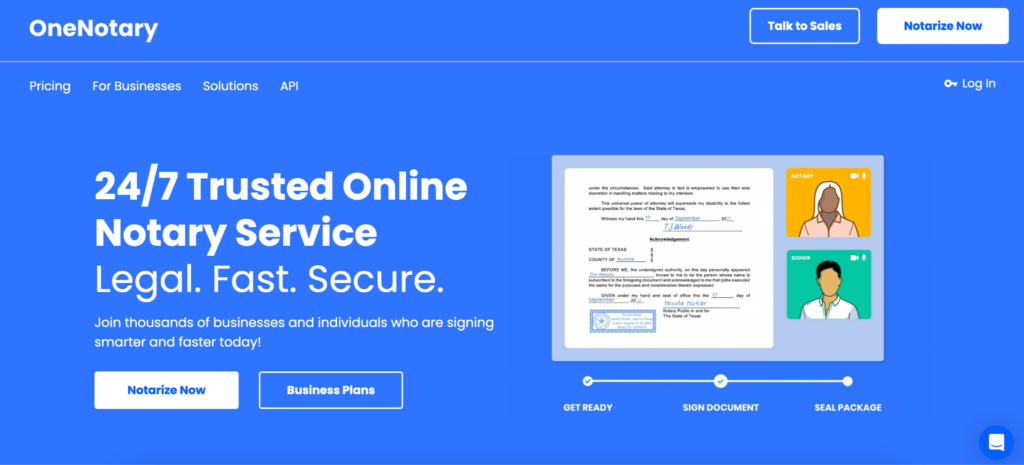
OneNotary is shaping the direction of remote notarization by treating it as part of a larger operational system rather than a standalone service.
The platform is built with an API-first approach, which allows notarization to be embedded directly into existing workflows. This removes the need for separate interfaces and reduces the number of manual steps required to complete a transaction.
That structure is particularly relevant in industries like financial services, real estate, and insurance, where notarization is one step in a broader process.
What defines this approach:
- Notarization can be integrated into existing systems instead of being handled separately
- Identity verification, document processing, and session management are connected into one flow
- AI-assisted document handling reduces errors before the session begins
- A managed notary workforce ensures consistency across sessions
The platform focuses on making notarization behave as a predictable part of a workflow rather than an isolated event.
2. Notarize (Proof.com)
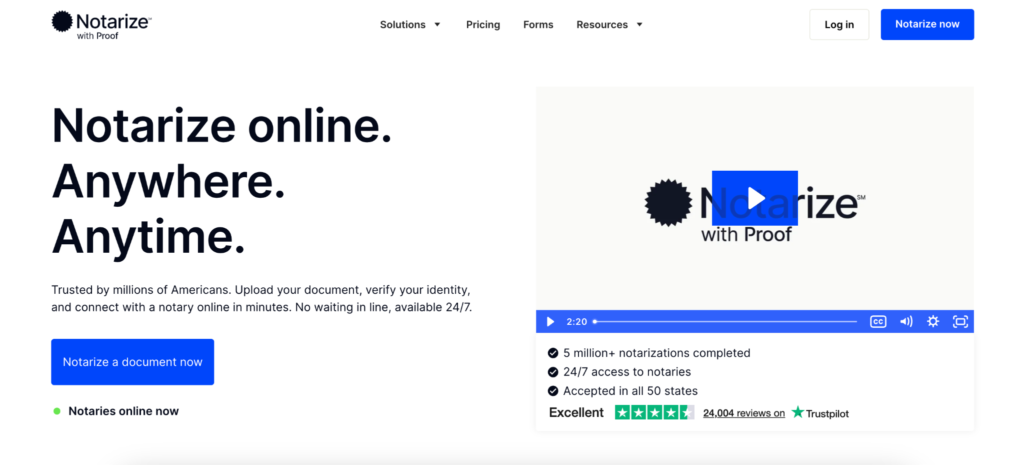
Notarize is influencing how remote notarization operates at scale.
The platform supports a large volume of transactions and maintains a structured process that can be repeated across different use cases.
This makes it suitable for organizations where notarization is part of ongoing operations rather than occasional use.
What shapes its role in the space:
- Consistent session structure across repeated transactions
- Support for real estate and financial workflows that require stability
- Integration capabilities that allow notarization to connect with other systems
- Recorded sessions and audit trails that support compliance requirements
The focus is on maintaining a reliable process across a high number of transactions.
3. DocuSign Notary
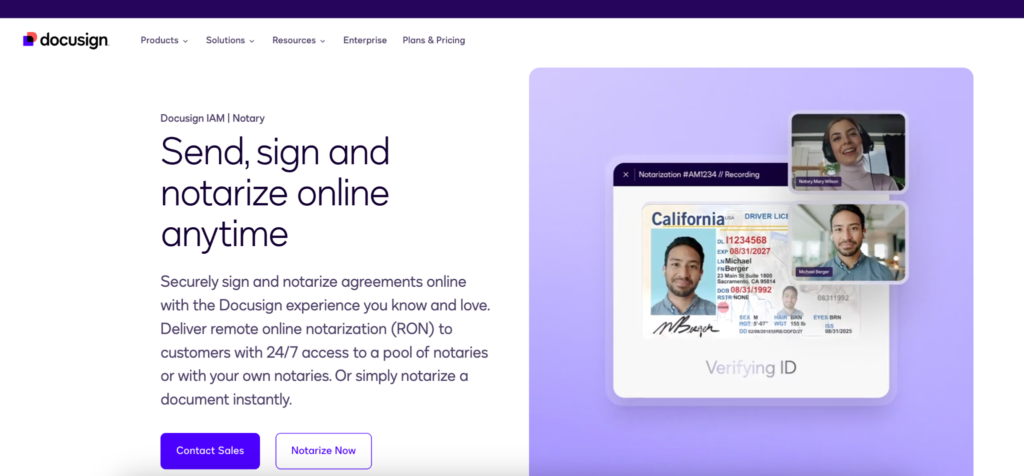
DocuSign Notary is shaping the future by embedding notarization into document ecosystems that are already widely used.
Instead of introducing a separate process, notarization becomes part of document management and signing workflows.
This changes how users experience the process.
What defines this direction:
- Notarization is integrated into existing document workflows
- Users stay within a single system throughout the process
- Document lifecycle tracking includes notarization as one of the steps
- Enterprise-level infrastructure supports large-scale use
This approach reduces fragmentation and keeps all document-related actions within one environment.
4. NotaryCam
NotaryCam contributes to the evolution of remote notarization by supporting more complex transaction scenarios.
Some workflows require multiple participants, cross-border coordination, or additional verification steps. The platform is designed to handle these cases without simplifying them into a generic process.
What defines this role:
- Support for multi-party sessions with structured coordination
- Ability to handle transactions that involve different jurisdictions
- Workflows that reflect legal and real estate requirements
- Session recording and documentation that support later review
This approach expands what remote notarization can handle, particularly in more demanding environments.
Where the Industry Is Moving
The direction of remote notarization is becoming clearer. It is moving toward systems that:
- Integrate directly into business workflows
- Reduce the need for manual coordination
- Maintain consistency across repeated use
- Support compliance without adding extra steps
These changes are not always visible on the surface. But they affect how the process works in practice.
Where AI Is Starting to Matter More
AI is becoming part of remote notarization, but not in the way people often expect. It’s not about adding visible tools. It’s about improving how the system behaves.
In practical terms, this includes:
- Preparing documents before notarization to reduce errors
- Identifying missing or inconsistent information early
- Improving how documents are processed across repeated transactions
- Reducing the need for manual correction during sessions
These adjustments don’t change the structure of the process.
They make it more reliable.
What Businesses Are Starting to Expect
As remote notarization becomes more common, expectations are changing. Businesses are no longer looking for basic functionality.
They expect:
- Integration with existing systems
- Predictable session behavior
- Minimal need for manual oversight
- Clear audit trails and documentation
These expectations reflect how notarization is being used. Not as a standalone service, but as part of larger workflows.
What Defines the Next Stage
The next stage of remote notarization is not about expanding features.
It’s about reducing friction. The platforms shaping this shift are focused on:
- Removing unnecessary steps from the process
- Aligning notarization with how businesses already operate
- Ensuring that every session produces consistent results
- Supporting long-term reliability and compliance
That’s what makes the process easier to manage at scale.
When the Process Starts to Feel Stable
At some point, the difference becomes clear.
In one case, notarization feels like a separate task that needs to be managed. In another, it becomes part of the workflow.
Documents move through the system without interruption. Sessions complete without extra coordination. Records are generated without gaps. That’s when remote notarization stops being something teams have to think about.
And that’s the direction the industry is moving toward.